Year 1
Welcome to Year 1!
Meet the Year 1 team
Class Teachers
-
Mrs E Austin - Year 1 and 2 Phase Leader and Kinglets Class Teacher (W, Th, F)
-
Mrs H Worley - Kinglets Class Teacher (M, Tu, W)
-
Miss K Cahalane - Sparrows Class Teacher
-
Mrs H Kilgallon - Housemartins Class Teacher
LSPs
-
Mrs N Messenger
-
Mrs L Allcott
-
Mrs T Kindon
-
Mrs K Saunders
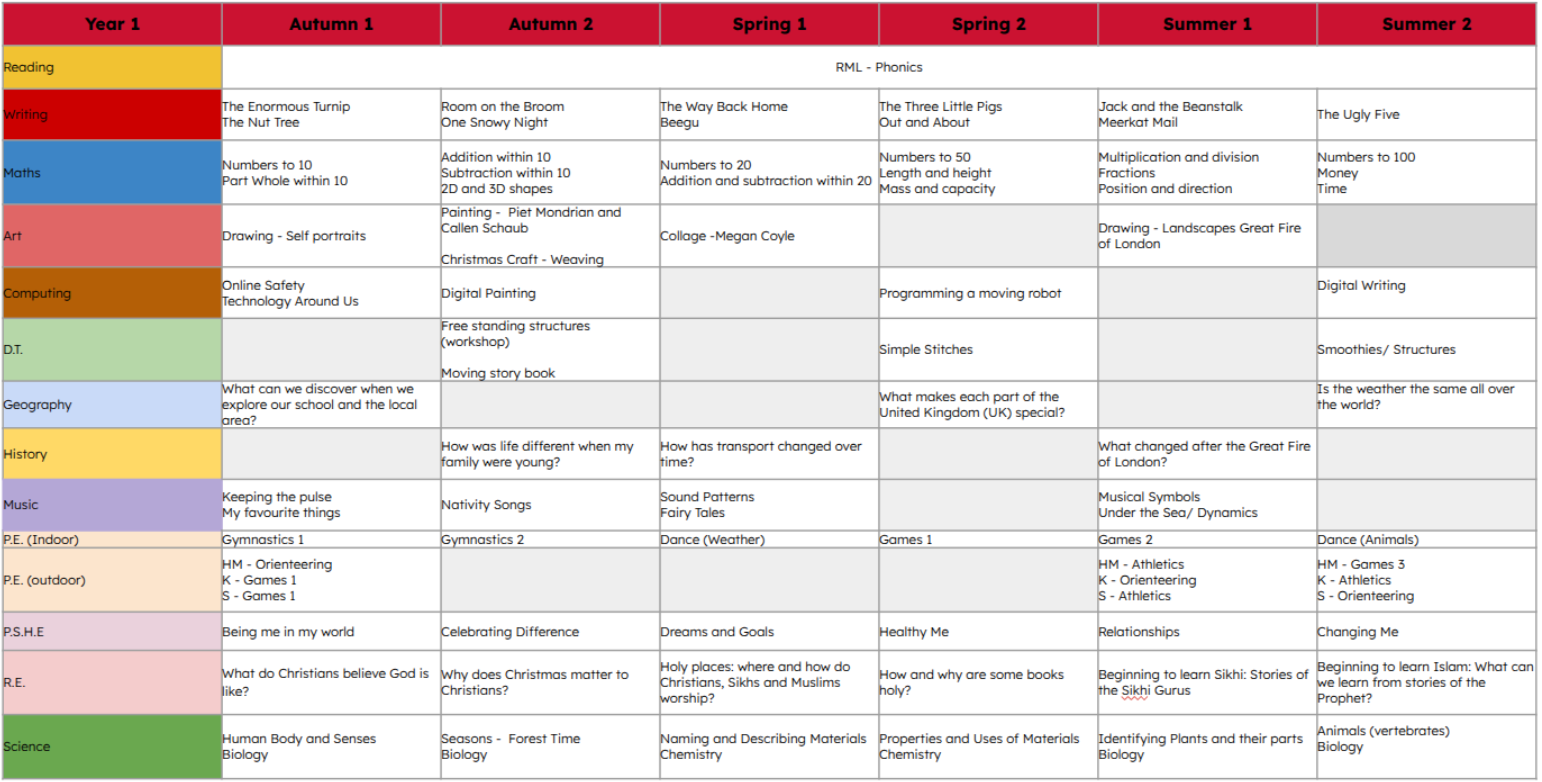
Our Learning Overview
Reading and Reading at Home
Reading is at the heart of learning at Rowley Hall. We want every child to become a confident, fluent reader who enjoys books and can use their reading skills across the curriculum.
Children develop their reading through daily phonics or whole-class reading sessions, alongside opportunities to enjoy a wide range of texts. As children become more fluent, they learn to retrieve information, make inferences, predict what might happen next and discuss what they have read.
Reading at home is an essential part of this journey. We encourage families to read regularly with their children, talk about books and record home reading in their child's reading diary. Teachers monitor these diaries and assess children's reading progress in school.
Reading books are carefully matched to children's developing skills. Progression through book bands is based not simply on the number of books read, but on fluency, understanding and the ability to apply reading skills independently.
Reading in school
In Year 1, children develop their early reading skills through daily Read Write Inc. phonics lessons. They learn to recognise sounds, blend them together to read words and build fluency through regular practice. Children also enjoy listening to stories and discussing characters, events and new vocabulary in their English lessons.
Reading at home
Please listen to your child read at least three times a week and record this in their reading diary. Encourage them to use their phonics to sound out unfamiliar words and reread sentences to develop fluency. Talk about what happens in the story and what might happen next. Sharing bedtime stories is also a wonderful way to develop a love of reading.
Transition from Reception
We understand that moving from Reception to Year 1 is an important step in your child's school journey. We aim to make this transition as smooth and positive as possible, helping even child feel happy, confident and ready for their next stage of learning. During the summer term, children take part in two transition days, spending time in their new Year 1 classrooms, meeting their teachers and becoming familiar with their new routines and learning environment. Our Reception and Year 1 staff work closely together to ensure a smooth transition, building on the children's experiences and learning in Reception. We recognise the importance of gradual transition, providing opportunities for practical activities, play and exploration as children become increasingly confident and independent in Year 1.
Phonics and the Phonics Screening Check
In Year 1, children continue to develop their early reading skills through daily Read Write Inc. phonics lessons. They learn to recognise letters and the sounds they represent, blend sounds together to read words and develop confidence and fluency when reading. Children are taught to use their phonics knowledge to read unfamiliar words independently. Regular practice, both at school and at home, helps children become accurate, confident readers.
In June, all Year 1 children take part in the statutory Phonics Screening Check. This is a short, one-to-one assessment with a familiar teacher to check how well children can use their phonics knowledge to read words. Children are asked to read 40 words, including 20 real words and 20 made-up words (sometimes called alien words). These made-up words help assess whether children can use their phonics skills to decode unfamiliar words rather than relying on words they already recognise. The check is not something children need to worry about. It is carried out in a relaxed and supportive way, and children will already be familiar with similar activities from their phonics lessons. Parents will be informed of their child's results. Children who do not meet the expected standard will receive additional support and have another opportunity to complete the check in Year 2.
Reading regularly with your child is one of the most valuable ways to support their progress. Encourage them to sound out unfamiliar words, blend sounds together and reread sentences to build fluency.
Please aim to hear your child read at least three times a week and record this in their reading diary. Remember to celebrate their efforts and continue sharing stories for enjoyment too! We also use ClassDoJo to share phonics practise resources with families. These resources help you practise the sounds and words your child is learning in school, providing opportunities to build their confidence and fluency at home.
Useful Links:
Reading Book Band Progression Chart